You Don't Need Another Workspace.
You Need to Know What You're Doing Today.
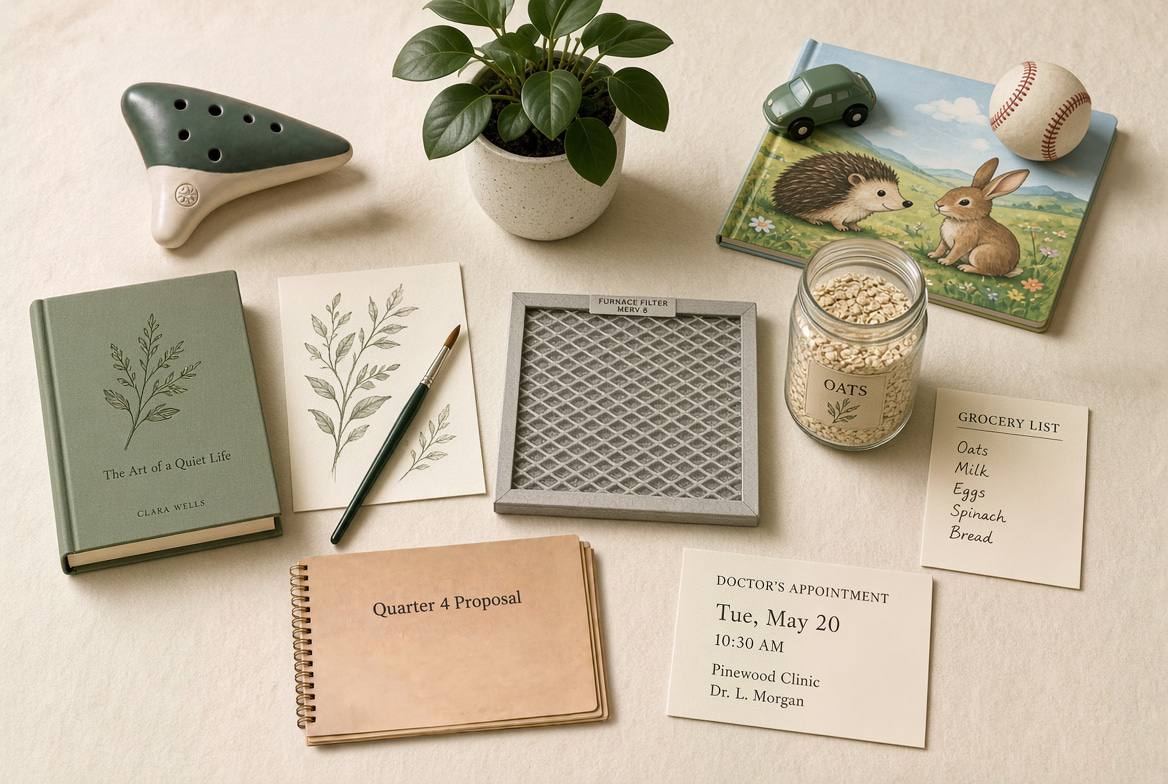
Work is a big part of my life, but it is not all of my life. There are many other things I care about: my family, my home, my health, the books I want to read, the paintings I want to paint, the instruments I want to practice.
There are also things that are not particularly interesting, but still need to get done—changing the furnace filter, cleaning out the pantry, buying pasta, oatmeal, and laundry detergent, making a doctor's appointment, remembering what I need to ask the doctor and what the doctor told me the last time I went. And then there are the unexpected things: a letter that needs to be mailed, something that needs to be picked up, a small task that takes only ten minutes but will not get done if I forget about it.
These are all parts of my life. They may not be equally important, but they all matter in some way. So why is it that when we look for ways to organize our lives, we tend to organize around work and projects, while so many other things are left to memory? Why couldn't I find something that worked?
I am a working mom. I needed something that could keep track of my work and everything else that I was responsible for. I went through dozens and dozens of digital organizers, both web-based and apps, but none of them quite fit what I needed.
Some were designed for large organizations and complicated projects. They had all kinds of features for managing work, but they were more than I needed for the way I worked. Others were simple to-do lists—everything was a line item, one, two, three, four. That worked for a grocery list, but what about a project with several steps, each with its own checklist? I needed a way to organize the larger piece of work without losing track of the individual things that needed to happen.
And what about the things that did not need a project at all? I did not want to open a project just to remember to buy laundry detergent. I did not want to create an elaborate plan to remind myself to change a filter every few months. But these things still needed somewhere to go, because keeping them in my head meant that sooner or later, I would forget.
The calendar presented a different problem. If something was scheduled for Tuesday and I did not get to it on Tuesday, it could easily disappear into the past. I would have to move it to Wednesday, then Thursday, then another day. Before long, I was spending time moving tasks around instead of doing them.
I realized that I did not need another place to plan everything. I needed something that could keep track of the things I cared about, accommodate the different ways they needed to be organized, and help me see what I should do today.
The little things are still part of my life
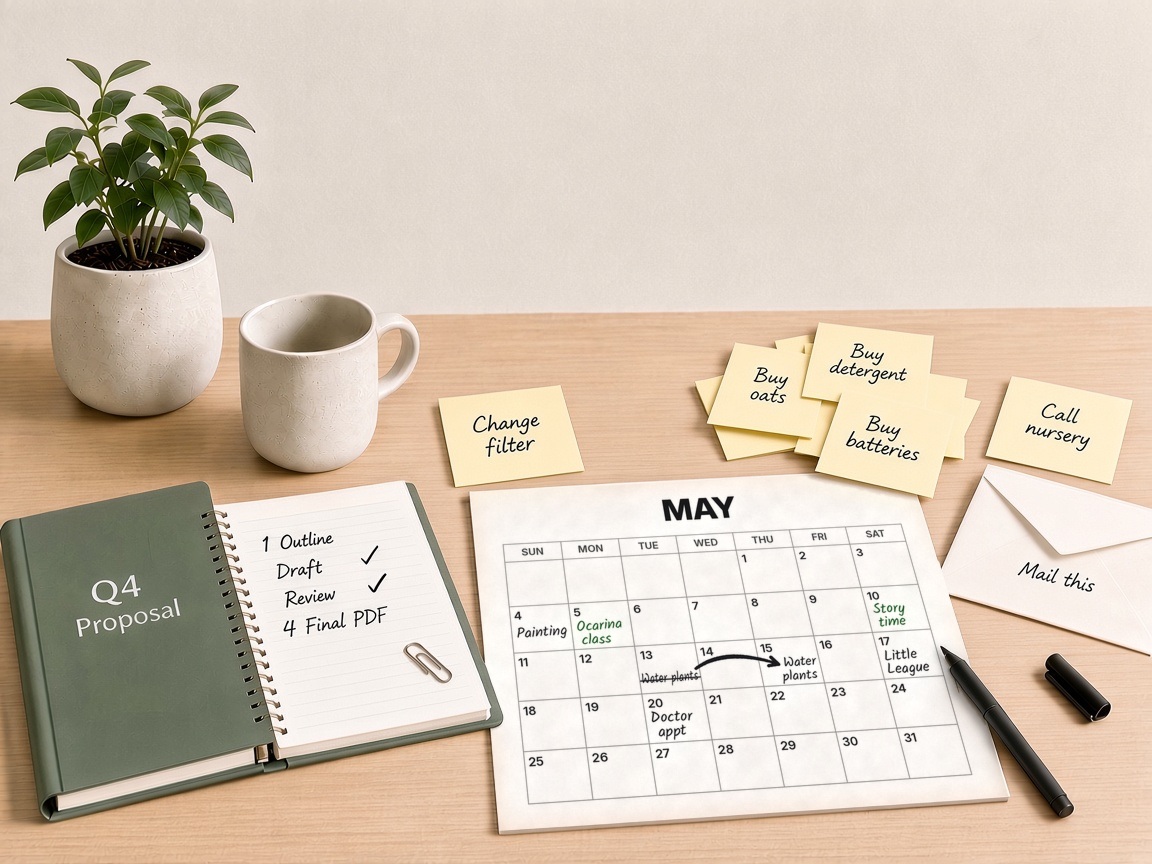
I began to wonder why the little things were treated so differently from the big things. A work project might have a name, a plan, a list of steps, and a place to track its progress. But remembering to exercise, practice an instrument, buy groceries, or make an appointment was often left to a separate list, a calendar, or my memory. Why should these things be any less worthy of being kept track of?
Not everything needs to become a project. That is not the point. Some things really are just things to remember. Some happen once. Some happen repeatedly. Some belong to a larger project, and others have nothing to do with any project at all. The point is that they all belong to a life.
And when I sit down at my desk in the morning, I do not want to spend the first part of my day trying to remember what I have forgotten. I want to be able to look at everything I need to keep track of and figure out what deserves my attention today. That is a different problem from simply making a list of tasks.
What I wanted Sageboard to do
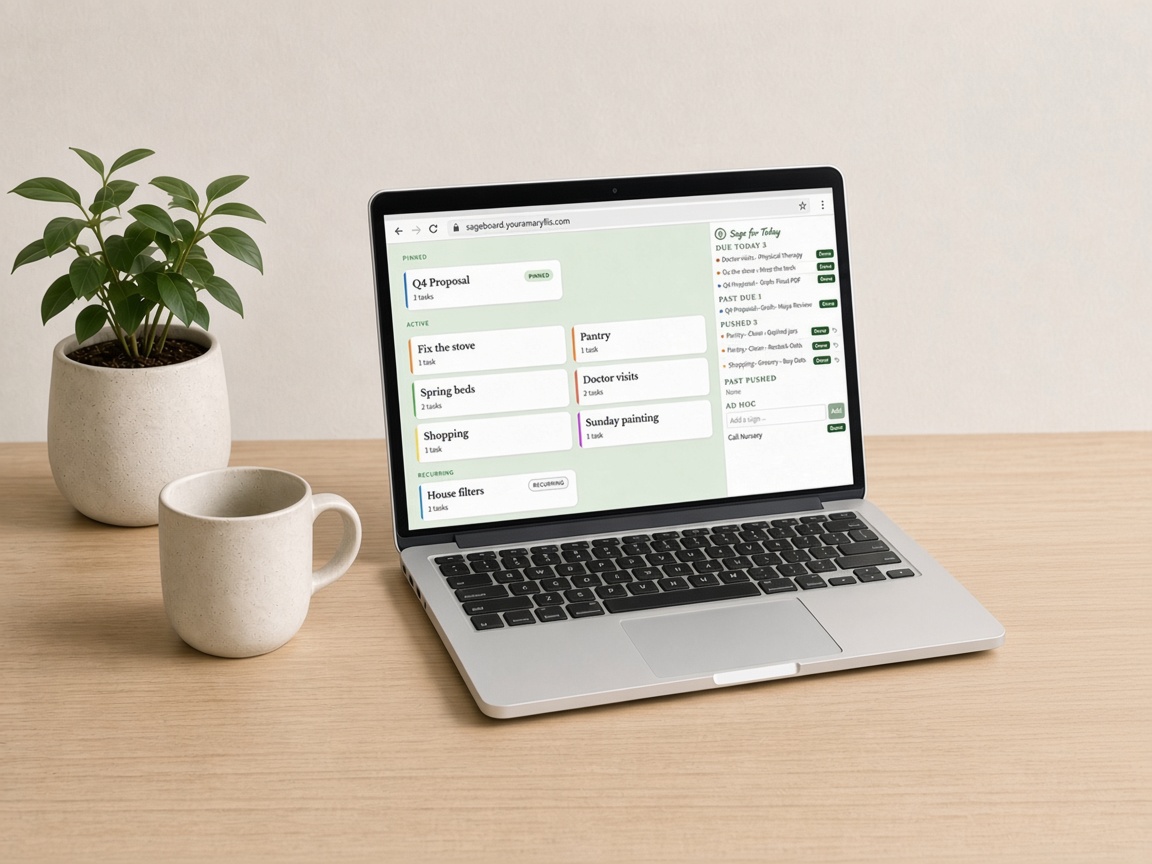
Sageboard grew out of that need. It was made by a working mom, for working moms, because I could not find an organizer that worked the way I needed it to. I wanted a place where larger projects could have their own structure and smaller responsibilities could be kept track of without turning them into projects. I wanted recurring things to be remembered, and I wanted one-time tasks to have a place, too.
Most of all, I wanted to stop having to reconstruct my day from bits and pieces scattered across different places. The idea was not to plan more. It was to make it easier to see what I had already committed to, what needed attention, and what I could actually do today. That distinction matters to me.
When I open my work for the day, I may have a substantial project to move forward. I may also have an appointment, a household responsibility, or a small task I have been putting off. I need to be able to see those things in the context of everything else I care about.
Sageboard brings these different kinds of work and responsibilities together. Larger work can be broken into bite-size steps. Smaller items can be kept track of without requiring a project. Dates and recurring responsibilities have their place, while the daily view helps me see what is due, what has slipped past its intended date, and what I have chosen to bring forward. I do not have to treat every responsibility the same way. I just need a way to keep track of all of them.
So what am I doing today?
I think this is the question that gets lost when we spend too much time organizing. We make lists. We arrange projects. We move dates. We reorganize when things change. All of that can be useful, but eventually we still have to sit down and do the work.
And the work is not always the big, important project sitting at the top of a plan. Sometimes it is making a phone call. Sometimes it is buying something the household needs. Sometimes it is taking one small step toward something we have wanted to do for a long time. These things may look unrelated when we list them separately. But they have one thing in common: they are all part of what we are trying to manage in our lives.
I built Sageboard because I wanted to see everything that I care about without having to spend so much time keeping track of it all. I wanted to know what was for today, and then get on with doing it.
If you want to see how this idea works in practice, the Sageboard Story walks you through the method and the product in six visual boards.
You don't need another workspace.
You need to know what you're doing today.
I'm done with planning. Let's just get it done.